
17 November 2026 · Saify Advance Materials
PTFE & Teflon Rods and Sheets Supplier in Bangalore
Discover PTFE (Teflon) rods and sheets, their properties, industrial applications and material grades. Learn how PTFE is used in chemical processing, pump and valve manufacturing, electrical insulation and precision engineering. Explore custom-machined PTFE components and sourcing solutions from Saify Advance Materials, Bangalore.
PTFE (Teflon) Rods and Sheets: Properties, Applications, Grades and Industrial Uses
Introduction to PTFE (Teflon)
PTFE, short for Polytetrafluoroethylene, is a high-performance engineering plastic commonly known as Teflon. Teflon is a registered brand name associated with PTFE products. The material is widely recognised for its excellent chemical resistance, extremely low coefficient of friction, non-stick properties and electrical insulation characteristics.
PTFE (Teflon) is used across several industries, including chemical processing, pharmaceutical manufacturing, electrical and electronics, automotive, pump and valve manufacturing, and precision engineering.
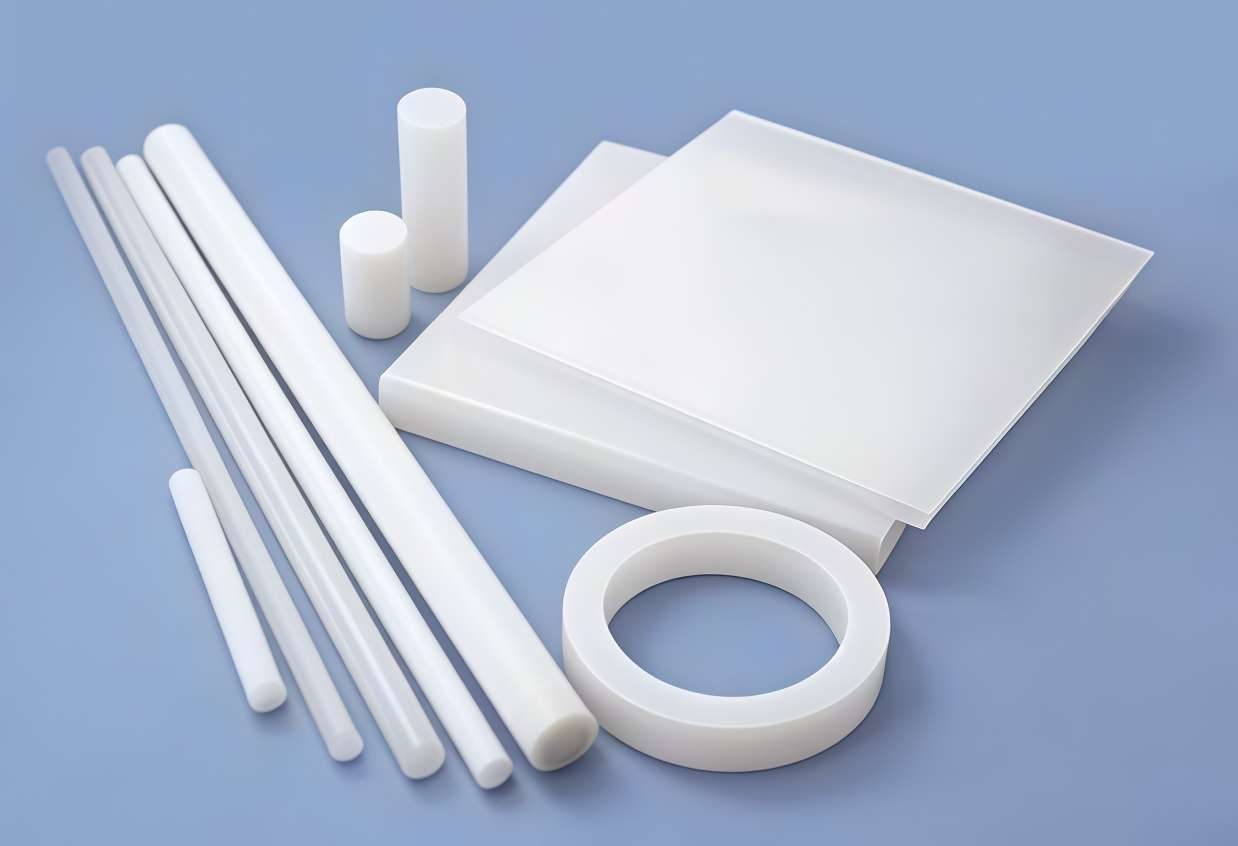
Available in different forms, including PTFE rods, Teflon rods, PTFE sheets and Teflon sheets, the material is commonly used as a raw material for machining and manufacturing industrial components.
Whether used for manufacturing chemical-resistant gaskets, precision-machined bushes, valve seats, electrical insulation components or sliding parts, PTFE offers a combination of properties that makes it suitable for demanding industrial environments.
For manufacturers and procurement teams looking for a reliable PTFE or Teflon rods and sheets supplier in Bangalore or elsewhere in India, understanding the material's properties, grades and applications is essential when selecting the right product.
What Are PTFE Rods and Sheets?
PTFE rods and sheets are semi-finished engineering plastic products manufactured from polytetrafluoroethylene resin. They are primarily used as raw materials for machining, fabrication and industrial component manufacturing.
PTFE (Teflon) Rods
PTFE rods, commonly referred to as Teflon rods, are cylindrical stock materials available in different diameters and lengths. They are commonly used for CNC machining, turning and manufacturing components such as:
- PTFE bushes and sleeves
- Valve seats and sealing components
- Chemical-resistant spacers
- Bearings and wear components
- Electrical insulating components
- Custom-machined industrial parts
PTFE rods are particularly useful for manufacturing cylindrical and precision-machined components where chemical resistance and low friction are important.
PTFE (Teflon) Sheets
PTFE sheets, also known as Teflon sheets, are flat stock materials available in different thicknesses and dimensions. They are used for machining, cutting, gasket fabrication and manufacturing flat components.
Common applications include:
- Industrial gaskets and seals
- Pump and valve components
- Sliding plates and wear pads
- Electrical insulation components
- Chemical-resistant liners
- Custom-machined components
The choice between PTFE rods and sheets depends on the component design, machining requirements and intended application.
Key Properties of PTFE (Teflon) Material
PTFE is preferred in demanding industrial environments because of its distinctive physical, chemical and electrical properties.
1. Excellent Chemical Resistance
One of the biggest advantages of PTFE is its resistance to a wide range of chemicals, including many acids, alkalis, solvents and corrosive substances.
This makes PTFE suitable for applications in:
- Chemical processing plants
- Acid handling equipment
- Chemical transfer pumps
- Industrial valves
- Pharmaceutical manufacturing equipment
Its chemical compatibility makes it useful in environments where conventional plastics may deteriorate.
2. Low Coefficient of Friction
PTFE has one of the lowest coefficients of friction among commonly used solid engineering materials.
This property makes it suitable for manufacturing components that require smooth movement and reduced friction.
Typical applications include sliding bearings, PTFE bushes, wear strips, guide rails, valve seats and mechanical sliding components.
3. High Operating Temperature Range
Virgin PTFE can generally operate continuously at temperatures up to approximately 260°C, depending on the grade and application.
It also retains useful properties at very low temperatures, making it suitable for equipment exposed to fluctuating temperatures and demanding operating conditions.
4. Excellent Electrical Insulation
PTFE has excellent dielectric properties, high electrical resistivity and low dielectric loss.
It is used in electrical and electronic applications requiring reliable insulation.
Common applications include:
- Electrical insulating spacers
- High-frequency electrical components
- Cable insulation components
- Connector insulation
- Electrical equipment components
5. Non-Stick Properties
PTFE has a low surface energy, resulting in excellent non-stick characteristics.
This is particularly useful in food processing, pharmaceutical and industrial machinery applications where material adhesion needs to be minimised.
6. Moisture Resistance
PTFE has extremely low water absorption and performs well in humid and moisture-exposed environments.
This makes it useful for electrical insulation, chemical equipment and industrial components operating in demanding conditions.
Industrial Applications of PTFE Rods and Sheets
PTFE is used across several manufacturing industries. Its application is not limited to chemical resistance; it also plays an important role in component manufacturing, sealing systems, electrical insulation and precision engineering.
1. Chemical and Process Industries
Chemical processing equipment frequently operates in environments involving corrosive chemicals, solvents and aggressive fluids.
PTFE is used to manufacture:
- Chemical-resistant pump components
- Valve seats and liners
- Gaskets and sealing elements
- Tank and vessel lining components
- Chemical transfer equipment components
- Corrosion-resistant spacers
PTFE's chemical resistance makes it a preferred material for many applications involving aggressive chemical exposure.
2. Pump and Valve Manufacturing
Pump and valve manufacturers use PTFE for components that require chemical resistance, low friction and dimensional stability under suitable operating conditions.
Typical components include:
- Pump bushes
- Valve seats
- Wear rings
- Seal rings
- Piston rings
- Gaskets
- Valve liners
PTFE rods are particularly useful for manufacturing turned components, while PTFE sheets are commonly used for cutting and machining flat sealing components.
3. Pharmaceutical and Food Processing Industries
PTFE is used in pharmaceutical and food processing equipment because of its chemical resistance, low friction and non-stick characteristics.
Applications include equipment seals and gaskets, non-stick machine components, product-contact guides, chemical-resistant pump components and sliding parts in processing equipment.
For direct food or pharmaceutical contact, the selected material grade must meet the applicable regulatory and customer requirements. Not every PTFE grade automatically qualifies.
4. Automotive and Automobile Component Manufacturing
PTFE is used in automotive applications where low friction, wear resistance and chemical compatibility are required.
Some applications include:
- PTFE bushes
- Sliding components
- Sealing rings
- Spacers
- Low-friction bearing components
- Fuel and fluid system seals
PTFE can also be used in specialised components exposed to oils, fuels and other automotive fluids, subject to compatibility and operating conditions.
5. Electrical and Electronics Manufacturing
PTFE is an excellent electrical insulating material and is used in applications where electrical performance and thermal stability are important.
Typical applications include:
- Electrical insulating spacers
- Connector components
- High-frequency insulating parts
- Electrical terminal insulation
- Precision insulating components
- Specialised electronic equipment components
Its low dielectric loss makes it particularly useful in certain high-frequency applications.
6. Industrial Machinery and Precision Engineering
Engineering companies use PTFE rods and sheets as raw materials for manufacturing custom-machined components.
Common applications include:
- Wear pads
- Guide strips
- Sliding plates
- Bushes
- Bearings
- Machine spacers
- Sealing components
- Custom CNC-machined parts
PTFE rods are especially useful for turning and machining cylindrical components, whereas sheets are preferred for flat components and cut parts.
Types and Grades of PTFE Materials
PTFE is available in different formulations depending on the intended application.
1. Virgin PTFE
Virgin PTFE is manufactured without added reinforcing fillers.
Characteristics include:
- Excellent chemical resistance
- Excellent electrical insulation
- Low friction
- High purity
- Excellent non-stick properties
Applications include chemical equipment, electrical insulation components, seals and gaskets.
2. Glass-Filled PTFE
Glass-filled PTFE contains glass fibre reinforcement to improve certain mechanical and wear-related properties.
Depending on the formulation, it can offer improved wear resistance, reduced deformation under load, better compressive properties and improved dimensional stability.
It is used in bearings, seals, bushes and mechanical components.
3. Carbon-Filled PTFE
Carbon-filled PTFE is used in applications where improved wear performance and mechanical properties are required.
Typical applications include industrial bearings, dynamic sealing components, wear-resistant components and mechanical sliding parts.
Filled PTFE grades have different electrical and chemical properties compared with virgin PTFE. Grade selection should be based on the application.
PTFE Rods vs PTFE Sheets: Which Should You Choose?
Both products are manufactured from PTFE, but their intended applications and machining requirements differ.
| Parameter | PTFE Rods | PTFE Sheets |
|---|---|---|
| Shape | Cylindrical | Flat plates |
| Common processing | Turning and CNC machining | Cutting, milling and machining |
| Typical components | Bushes, sleeves, valve seats | Gaskets, plates, liners |
| Applications | Sealing and mechanical parts | Flat insulation and sealing parts |
| Selection basis | Required diameter and length | Thickness and sheet dimensions |
When should you choose PTFE rods?
Choose PTFE rods when manufacturing cylindrical or turned components such as bushes, spacers, sleeves, seals and valve seats.
When should you choose PTFE sheets?
Choose PTFE sheets when manufacturing flat components, gaskets, sliding plates, insulating spacers and custom-machined flat parts.
The correct selection depends on the final component geometry, material grade and operating conditions.
PTFE vs Other Engineering Plastics
PTFE is often compared with other engineering plastics such as POM (Delrin), Nylon and UHMWPE. Each material has different properties and applications.
| Property | PTFE | POM (Delrin) | Nylon |
|---|---|---|---|
| Chemical resistance | Excellent | Moderate | Varies by grade |
| Friction | Very low | Low | Moderate |
| Wear performance | Grade dependent | Good | Good |
| Electrical insulation | Excellent | Good | Good |
| Moisture absorption | Very low | Low | Higher |
| Mechanical strength | Relatively low | Higher | Higher |
PTFE is generally selected when chemical resistance, low friction, electrical insulation and temperature performance are more important than high mechanical strength.
POM and Nylon may be more suitable for applications requiring higher mechanical strength, rigidity and load-bearing capability.
Factors to Consider When Buying PTFE Rods and Sheets
Before purchasing PTFE material, manufacturers should consider several factors to ensure the material meets the intended application requirements.
1. Material Grade
Determine whether virgin PTFE or a filled grade is required. Different formulations offer different mechanical, electrical and wear characteristics.
2. Dimensions and Thickness
For rods, specify the required diameter and length.
For sheets, specify the thickness, width and length.
3. Operating Temperature
Consider the continuous operating temperature and any temperature fluctuations during operation.
4. Chemical Compatibility
Identify the chemicals, solvents or fluids that the material will come into contact with.
5. Mechanical Requirements
Consider compressive loads, friction, wear, creep and dimensional tolerances.
6. Application Requirements
Specify whether the material will be used for gaskets, bushes, bearings, electrical insulation or custom-machined components.
Providing these details helps suppliers recommend the appropriate PTFE material for the application.
Custom PTFE Components as per Drawings and Requirements
Apart from supplying standard PTFE rods and sheets, Saify Advance Materials also undertakes custom PTFE component requirements for industrial applications.
We can assist with sourcing and supplying machined PTFE components based on customer drawings, dimensions and application requirements.
Custom PTFE components can include:
- PTFE bushes and sleeves
- Precision-machined spacers
- PTFE washers and rings
- Valve seats and sealing components
- Custom gaskets
- PTFE blocks and plates
- Wear pads and sliding components
- Specialised industrial components
Customers can share their technical drawings, component dimensions or sample requirements for evaluation.
Whether you require standard PTFE stock material or components manufactured to specific dimensions, we can assist with your sourcing requirements.
PTFE (Teflon) Rods and Sheets Supplier in Bangalore – Saify Advance Materials
Saify Advance Materials is an industrial materials trading company based in Bangalore, supplying engineering plastics and electrical insulation materials to manufacturing industries.
We cater to businesses looking for engineering plastic materials for machining, fabrication, component manufacturing and industrial applications.
Our product portfolio includes:
- PTFE / Teflon Rods and Sheets
- POM / Delrin Rods and Sheets
- Nylon Rods and Sheets
- HDPE Sheets and Rods
- PP Sheets and Rods
- PVC Sheets and Rods
- FR4 and G10 Glass Epoxy Sheets
- Other industrial insulation materials
We work with industrial buyers, engineering companies, component manufacturers and procurement teams looking for dependable material sourcing.
Whether you require PTFE rods for CNC machining, Teflon sheets for gasket manufacturing or custom PTFE components manufactured to your specifications, Saify Advance Materials can assist with your material requirements.
Looking for PTFE (Teflon) Rods, Sheets or Custom-Machined Components? Partner with Saify Advance Materials
Finding the right engineering plastic is only one part of the procurement process. Sourcing materials in the correct grade, arranging machining and getting components manufactured to precise dimensions can be equally challenging.
At Saify Advance Materials, Bangalore, we help manufacturers and engineering companies source PTFE rods, Teflon sheets and custom-machined PTFE components based on their specific requirements.
Whether you need standard PTFE stock material or ready-to-use components manufactured to your drawings, we can assist with your sourcing requirements.
Our component sourcing capabilities include:
- Custom PTFE bushes, sleeves and spacers
- Precision-machined PTFE washers and rings
- PTFE valve seats and sealing components
- Custom PTFE gaskets and liners
- Wear pads and sliding components
- CNC-machined components as per technical drawings
- Specialised engineering plastic components
Have a component drawing or an existing sample?
Share your technical drawing, dimensions, material grade or sample with our team. We can evaluate your requirement and assist with sourcing the appropriate material and machined component.
We work with manufacturers, OEMs, procurement teams, machine builders and industrial component manufacturers looking for dependable sourcing solutions.
Get in touch with Saify Advance Materials for your next component requirement.
Send us your drawings or material specifications to request a quotation.
Website: https://saifyadvancematerials.com/
Location: Bangalore, Karnataka, India.
Frequently Asked Questions About PTFE (Teflon) Rods and Sheets
1. What is PTFE material commonly used for?
PTFE is commonly used for manufacturing industrial gaskets, seals, bushes, bearings, valve seats, pump components, electrical insulators and chemical-resistant parts.
2. What is the difference between PTFE and Teflon?
PTFE stands for Polytetrafluoroethylene, which is the generic chemical name of the material. Teflon is a registered brand name associated with PTFE products. Both terms are commonly used when referring to this high-performance fluoropolymer.
3. Are Teflon rods and PTFE rods the same?
Teflon rods generally refer to rods made from PTFE. They offer excellent chemical resistance, low friction, non-stick properties and electrical insulation. When purchasing, it is important to confirm the actual material grade and manufacturer.
4. Are PTFE rods suitable for CNC machining?
Yes. PTFE rods are commonly machined using turning, milling and other conventional machining processes to manufacture bushes, sleeves, seals, spacers and other custom components.
5. Are PTFE sheets suitable for gasket manufacturing?
Yes. PTFE sheets are widely used for manufacturing industrial gaskets and sealing components, particularly in chemical processing and fluid-handling applications.
6. What is the maximum operating temperature of PTFE?
Virgin PTFE is generally rated for continuous service temperatures up to approximately 260°C. Actual performance depends on the grade, load and operating environment.
7. Is PTFE suitable for electrical insulation?
Yes. PTFE has excellent dielectric properties and electrical insulation characteristics, making it suitable for specialised electrical and electronic components.
8. What is the difference between virgin and filled PTFE?
Virgin PTFE contains no reinforcing fillers and offers excellent chemical resistance and electrical insulation. Filled PTFE contains materials such as glass or carbon to improve specific mechanical and wear properties.
9. Can PTFE components be manufactured as per custom drawings?
Yes. PTFE rods and sheets can be machined into custom components according to specified drawings, dimensions and application requirements. Saify Advance Materials undertakes custom PTFE component requirements for industrial applications.
10. Where can I buy PTFE rods and sheets in Bangalore?
Saify Advance Materials, based in Bangalore, supplies industrial PTFE (Teflon) rods and sheets, engineering plastics and insulation materials. Contact our team for product availability, dimensions, custom component requirements and quotations.
Saify Advance Materials – Your Sourcing Partner for Industrial Engineering Plastics and Electrical Insulation Materials.